CITIES OF THE FUTURE
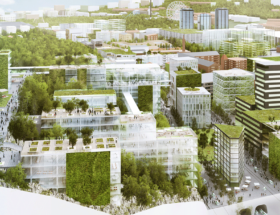
From Bogota to Buenos Aires, cities have since caught on to the concept, using varying terms, like human-scale city (Buenos Aires), vital neighborhoods (Bogota), and 20-minute neighborhoods (Melbourne). In Shanghai and Chengdu, they’re named 15-minute community life circles.
Cities are going to be around as the world continues to urbanize. More than 70 percent of the world’s population will live in urban areas by 2050, according to the UN-Habitat World Cities Report 2022.
Cities, according to Sharif, should be perceived as solutions to current problems, and city leaders “need to better plan, build and manage our cities”. The UN-Habitat supports cities with the “resources and tools to make people-centric decisions and create socially and environmentally sustainable human settlements”.
TRANSFORMATION IS PROGRESS
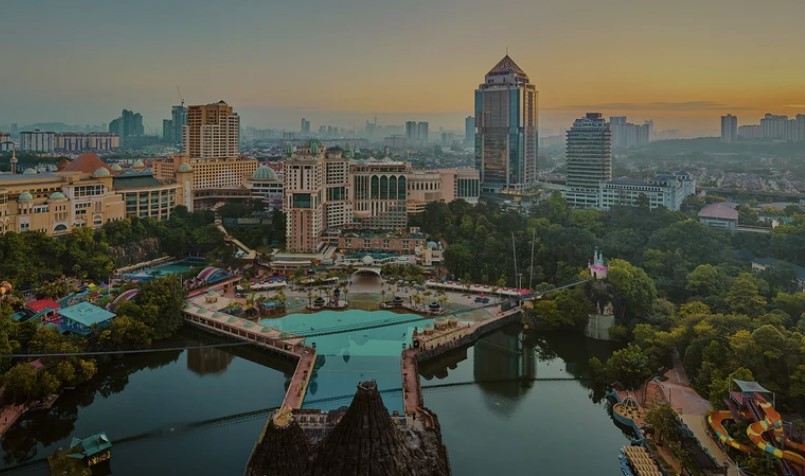
While cities worldwide are redesigning urban areas to embrace the future, the 15-minute city is already a reality in Sunway City Kuala Lumpur. Located 20 minutes from Malaysia’s capital, the sprawling 800-acre Sunway City Kuala Lumpur is setting the standard for sustainability, having successfully merged technology with sustainable ideas.
Sunway City Kuala Lumpur is one of Malaysia’s busiest towns, seamlessly connected to all the township’s hotspots within 15 minutes. Eco walkways such as the elevated 4.3-kilometer Canopy Walk connect the university to the local mall. Shuttle service is on hand for those in a hurry. The world’s first all-electric Bus Rapid Transit System, the BRT-Sunway Line, easily connects Sunway to the neighboring city Subang Jaya, downtown Kuala Lumpur and the Kuala Lumpur International Airport.
I start every morning with a 20-minute walk with our dogs around Bayrocks Lake. Then I walk to the university, which also takes 20 minutes. As often as possible, I walk home for lunch with my wife and take an evening walk again around Bayrocks Lake. On average, I walk around 10 kilometers every day.
Professor Sibrandes Poppema President of Sunway University and Sunway City Kuala Lumpur resident
Professor Sibrandes Poppema, a Sunway City Kuala Lumpur resident and also the President of Sunway University, moved to the city from Groningen in the Netherlands four years ago. Poppema has been championing the benefits of living in the township, calling it “green, smart, and sustainable.”
“University students can expect a holistic education embracing sustainability and planetary health in a university, and a city that is walking the walk when it comes to sustainability,” says Poppema.
Before Sunway City Kuala Lumpur became a model city, the area it was built on was a former tin mine that contributed to Malaysia’s then ranking as one of the world’s leading tin producers. Guided by Sunway Group founder and chairman Tan Sri Dr. Jeffrey Cheah’s vision of creating an integrated green township, this wasteland was given a second lease of life and transformed into a blueprint for sustainable cities.
Today, Sunway City Kuala Lumpur has been certified as Malaysia’s first sustainable city by the Green Building Index. It’s also recognized as a “Low Carbon City” by the country’s Ministry of Environment and Water.
BUILDING TOMORROW’S CITIES
Sunway Group aims to emulate the success of Sunway City Kuala Lumpur in other Malaysia cities including Ipoh, Penang, and Kuala Lumpur.
Sunway City Ipoh is a 1,350-acre sustainable township situated amid natural wonders, such as 260-million-year-old limestone hills, rainforests, and thermal hot springs. Sunway’s strategy in developing this city includes focusing on biodiversity conservation and preservation of the natural environment.
The same strategy will also be used at Sunway City Iskandar Puteri, where the 7-kilometer Pendas River and lush mangrove forests will need preserving as the 1,800-acre integrated city develops.
Sunway is committed to halve carbon emissions by 2030 and achieving net zero by 2050. It is pledging to promote its net zero aspirations to its suppliers and will continue to engage them to reduce scope 3 emissions.
“But in the absence of a mature green economy, demanding suppliers be “green” may not be practical because the technology might be unavailable or financially unviable. This is even more so in specific industries heavily reliant on fossil fuels, such as utilities and oil & gas,” says Ong Pang Yen, Executive Director of the Chairman’s Office, Sunway Group.
As it accelerates the trend towards a low carbon and eventually carbon neutral economy, Sunway is focused on ensuring that all new townships completed in and after 2025 will be green-certified.
The UN-Habitat believes the 15-minute city concept is a pathway to a sustainable future with multiple co-benefits for health, equity, and climate change adaptation and mitigation. Across many regions, the urban model is already being conceptualized, but cities must now commit to turning these concepts into reality.