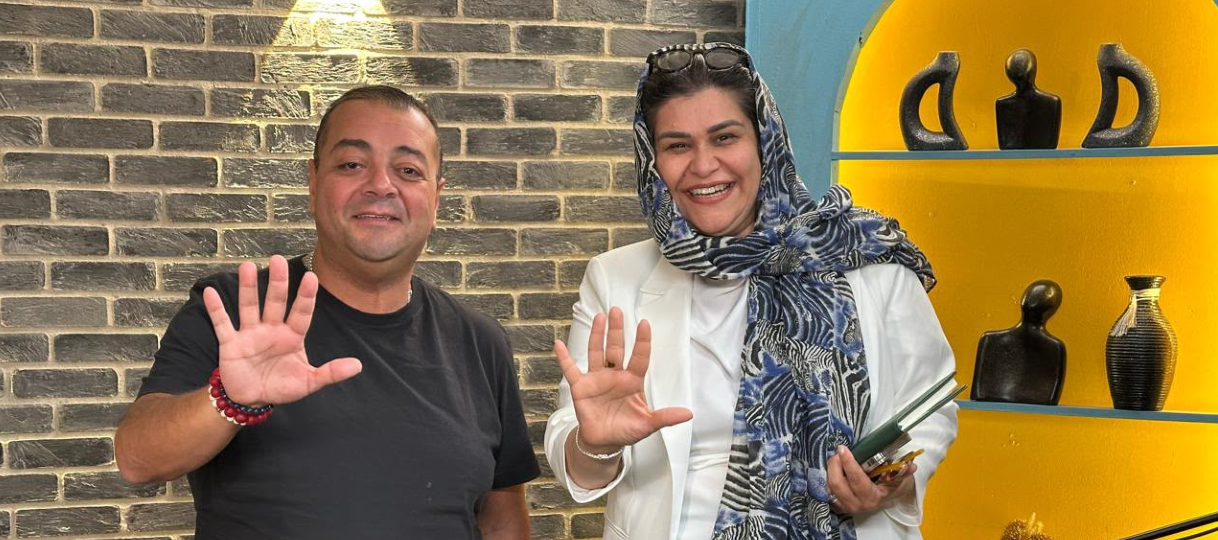
Dr. Reem Al-Turki Co-founder 5estedama and Eng Omar Ghaly Co-founder of 5estedama and Founder of the Egyptian Carbon Center
Turning Vision into Impact
Some of the most meaningful ideas begin with a shared belief that healthier, more sustainable communities require collaboration across disciplines and across borders.
That shared vision brought together Dr. Reem Al Turki, a Saudi sustainability advocate and social impact leader, and Eng. Omar Ghaly, an Egyptian expert in sustainable development and environmental innovation, the founder of egypt carbon center .
Together, they co-founded 5Estedama, combining their complementary expertise and regional perspectives to help organisations embed sustainability into their strategies, operations, and long-term growth.
For many years, sustainability was seen as separate from business strategy: a charitable activity, a marketing message, or a long-term aspiration to be tackled when time and budgets permitted.
The time has passed.
Sustainability is now a boardroom issue. Climate change, resource scarcity, regulation, consumer expectations, and investor scrutiny are all changing the environment in which companies operate.
For companies, from multinational corporations to local brands and start-ups, sustainability is no longer about “doing the right thing.” It’s about being relevant, resilient, and competitive in a world where environmental and social pressures are already impacting costs, supply chains, customer loyalty, and market access.
Business Resilience Through Sustainability
One of the most compelling reasons to act now is that companies are becoming more exposed to environmental and social risks.
Extreme heat, water stress, supply-chain disruption, rising energy prices, insurance costs, and material shortages all can affect day-to-day operations and long-term profitability.
These challenges are particularly evident in regions such as the Middle East and North Africa, where heat, water, food security, and urban resilience are increasingly pressing.
A sustainable business is more resilient to these pressures.
Companies can cut their dependence on vulnerable resources through energy efficiency, waste reduction, responsible water use, supply diversification, and circular production system design.
These are not just environmental measures. They are practical ways to protect operations, control costs, and build a more stable future.
Business Sustainability Benefits
| Business Pressure | Sustainable Response | Business Benefit |
| Rising energy cost | Energy efficiency and renewable energy | Lower operating costs and reduced exposure to price volatility |
| Material shortages | Waste reduction and circular design | Better resource use and stronger supply-chain resilience |
| Water stress | Water efficiency and reuse | Reduced operational risk in water-sensitive markets |
| Consumer scrutiny | Transparent sustainability reporting | Stronger trust and brand credibility |
| Regulatory change | Early compliance planning | Lower transition costs and improved market readiness |
Regulation Is Speeding Up
Companies can no longer treat sustainability reporting as voluntary or optional.
Globally, governments and regulators are demanding that companies recognize, quantify, and disclose their environmental and social impacts.
Large listed companies are already required under EU rules to report on social and environmental risks and how their activities impact people and the environment.
Sustainability disclosure is becoming an accepted part of corporate accountability, as evidenced by the introduction of the Corporate Sustainability Reporting Directive in the European Union and the International Sustainability Standards Board at the IFRS Foundation.
The IFRS Foundation stated that the standards aim to provide investors with globally comparable sustainability-related information, encompassing climate-related risks and opportunities.
For companies, the issue is more than a matter of legal compliance.
A business may not be directly covered by a regulation today, but it may be impacted through investors, banks, suppliers, export markets, or corporate buyers and partners who increasingly expect better sustainability data.
Those who begin early will be better prepared. Businesses that delay may face rapid and costly adjustments in the future.
What Do Consumers and Partners Expect More Of?
The market now demands sustainability.
Customers increasingly want to support brands that are clear about their values and conscientious in how they source, produce, package, and deliver.
Employees want purpose-driven companies to work for.
Environmental, social, and governance performance is increasingly important for investors and business partners.
This does not mean businesses should make vague environmental claims.
Greenwashing can damage trust more than saying nothing at all.
What matters is real change:
- Tangible targets
- Transparent progress
- Responsible sourcing
- Reduced waste
- Better packaging
- Fairer production
- Genuine operational improvements
This is particularly important for entrepreneurs, ethical brands, food innovators, designers, and conscious consumers.
Sustainability is not a catchphrase.
Businesses must uphold sustainability commitments through everyday decisions.
This commitment fosters customer loyalty while strengthening brand reputation and long-term success.
Sustainability Creates Value
Sustainability can create and protect value simultaneously.
From a defensive perspective, it allows businesses to reduce waste, energy consumption, regulatory risk, and supply chain vulnerability.
From an offensive perspective, it creates opportunities for innovation in:
- Products
- Services
- Packaging
- Logistics
- Food systems
- Fashion
- Construction
- Finance
- Urban living
Demand is already growing for:
- Low-carbon products
- Ethical sourcing
- Renewable energy solutions
- Plant-based innovation
- Upcycled design
- Sustainable finance
- Circular economy models
Investing now means helping shape these markets instead of reacting to them later.
This is especially true for small and medium-sized businesses.
Local food producers minimizing packaging waste, fashion labels supporting artisans, wellness brands sourcing responsibly, and property developers designing for heat and water efficiency can all turn sustainability into a competitive advantage.
Change Takes Time
Sustainability cannot be achieved overnight.
Businesses need time to:
- Rework supply chains
- Change production processes
- Collect environmental data
- Train employees
- Source better materials
- Build partnerships
- Earn stakeholder trust
Waiting to act could leave companies forced to respond quickly when regulations, cost pressures, or customer expectations become unavoidable.
Early adopters benefit from the ability to move gradually, learn quickly, spread investment over time, and build internal capabilities before sustainability becomes an external requirement.
Sustainability is not a campaign or a one-time announcement.
It is a long-term business strategy that defines how a company uses resources, manages risk, creates value, and contributes to the future of its community.
A Smarter Way Ahead
“It’s not about perfection; it’s about adopting sustainability today. It’s about moving forward.”
Businesses can begin by:
- Understanding their biggest impacts
- Setting realistic goals
- Measuring what matters
- Improving energy use
- Conserving water
- Reducing waste
- Improving sourcing
- Optimizing packaging
- Enhancing transportation
- Building a stronger workplace culture
Businesses that see sustainability as both a responsibility and an opportunity will prosper.
They will build trust, reduce risk, innovate with purpose, and align business success with the future conditions society and the economy require.
Sustainability is no longer a side conversation. It is the future of business.
For more information, please check the following links:
Egypt Carbon Center
www.egyptiancarboncenter.com
5estedama Podcast
https://www.youtube.com/playlist?list=PLgvdwE2Rf_rTKVBWad8r5vtmsgr_xIiV2