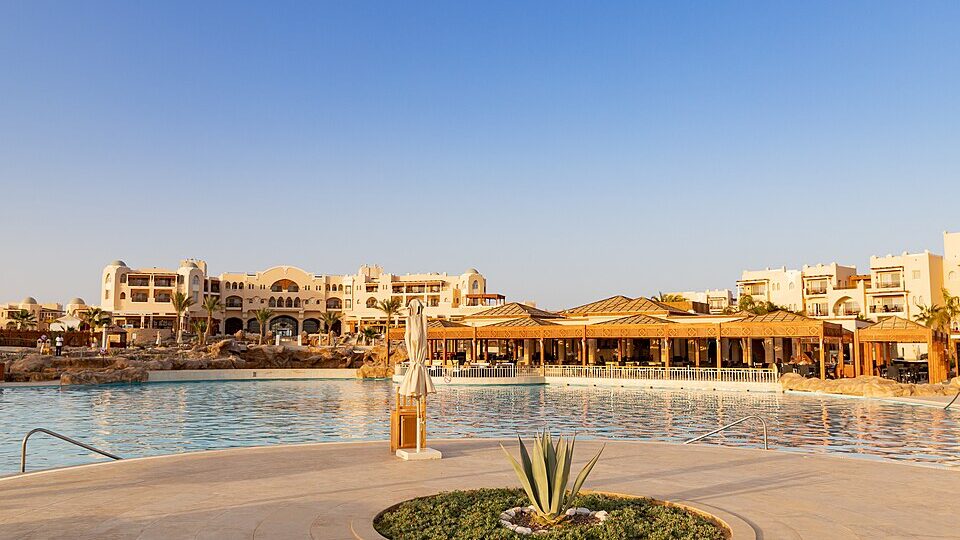
Kempinski Hotel, Soma Bay, Egypt. Photo: dronepicr / Wikimedia Commons, CC BY 2.0.
With new investment opportunities, digital healthcare services and growing international partnerships, Egypt is taking steps to develop a more integrated health tourism sector. Could this become one of the country’s next areas of growth?
Egypt has long attracted international visitors for its history, culture, climate and coastal destinations. Today, the country is exploring another opportunity: positioning itself as a regional destination for medical care, rehabilitation and wellness experiences.
Recent developments suggest that health tourism is gaining momentum as an area of economic development and investment. Government initiatives, new digital infrastructure, international partnerships and plans for specialised health tourism destinations are beginning to establish a more coordinated approach to the sector.
For Egypt, the opportunity extends beyond attracting patients from overseas. It could also create new avenues for investment in healthcare infrastructure, hospitality, technology and wellness services, bringing together industries that have traditionally operated separately.
Building a National Health Tourism Ecosystem
A significant development came in August 2026 with the launch of Tour 4 Cure, Egypt’s national digital health tourism platform.
Designed to simplify the experience for international patients, the platform aims to connect medical services with travel arrangements, accommodation and follow-up care.
In November, Egypt’s Ministry of Health and Population reported that 986 healthcare providers, including hospitals, doctors, clinics and medical centres, had registered on a trial basis as prospective participants.
The platform had also processed approximately 250 cases during its earlier pilot phase, according to government announcements.
These developments reflect an effort to create a more accessible and coordinated experience for international visitors seeking treatment in Egypt.
Importantly, they also point towards opportunities for collaboration between healthcare providers, technology companies, insurers, hospitality operators and investors.
New Destinations and Investment Opportunities
Beyond the digital platform, Egypt is examining opportunities to develop dedicated health tourism facilities in locations with distinctive natural and environmental characteristics.
During a November meeting, the National Council for Health Tourism presented proposed investment sites in El-Hiba in Beni Suef and Bir El-Matar in the Bahariya Oasis. Preliminary plans for coastal destinations and other sites in the Bahariya Oasis are also under consideration.
Safaga, on the Red Sea coast, has been identified as a potential location for a specialised therapeutic tourism resort centred on its natural sand resources.
These proposals highlight the potential to develop destinations that combine medical services, rehabilitation, accommodation and nature-based experiences.
While these projects remain at the planning or assessment stage, they illustrate how Egypt could build on its geographical diversity and established tourism infrastructure to attract new forms of investment.
The opportunity is particularly interesting for developers and hospitality operators seeking to diversify their offerings and respond to changing expectations around health, lifestyle and wellbeing.
The Growing Connection Between Healthcare and Wellness
One of the most interesting aspects of Egypt’s emerging strategy is the potential convergence of medical tourism and the wider wellness economy.
According to the Global Wellness Institute’s 2026 Global Wellness Economy Monitor, the global wellness economy reached a record US$7.5 trillion in 2025 and is projected to grow to US$10.9 trillion by 2030. The Middle East and North Africa has been the fastest-growing regional wellness market in recent years, highlighting expanding opportunities for investment in wellness tourism, hospitality and related services.
Medical tourism generally focuses on patients travelling to receive healthcare services or specialised treatment. Wellness tourism, by contrast, is associated with experiences that support personal wellbeing, such as physical activity, relaxation, nutrition and healthy lifestyles.
Although distinct, the two sectors can complement each other through services such as medically supervised rehabilitation, recovery programmes and preventive healthcare.
Egypt’s National Council for Health Tourism is developing proposed standards for facilities that integrate clinical and wellness-related services. These cover areas including patient safety, medical nutrition, hospitality, environmental sustainability and governance.
This approach could encourage the development of integrated destinations where healthcare quality, hospitality and wellbeing are considered together.
For Egypt’s hospitality and real estate sectors, it presents an opportunity to explore new concepts and services that respond to the growing international interest in health-conscious travel and living.
International Partnerships and Market Expansion
Recent developments also suggest that Egypt is working to strengthen its international reach.
In November, the Egypt Healthcare Authority announced new cooperation agreements with international health insurers and related organisations to facilitate access to treatment for foreign patients.
According to figures released by the authority in August, medical tourism revenues across its facilities had increased by 37% compared with the previous year, exceeding US$10 million, with approximately 42,000 medical tourists treated.
The figures relate to the authority’s operations rather than the entire Egyptian medical tourism market, but they offer an indication of growing activity.
Egypt is also strengthening its outreach to African markets. A cooperation agreement announced in November between the National Council for Health Tourism and African Dream Company aims to promote Egyptian medical and wellness services through multilingual media campaigns, industry events and partnerships.
These initiatives could help position Egypt more competitively among international patients while creating opportunities for healthcare providers and other businesses serving the sector.
What Will It Take to Attract Investment?
Developing a competitive health tourism industry requires more than attractive destinations or modern medical facilities.
International patients and investors need confidence in service quality, transparent pricing, accreditation, insurance arrangements and continuity of care.
Equally important is the ability to deliver a coordinated experience, from the initial enquiry and travel arrangements to treatment, recovery and follow-up.
Egypt’s efforts to establish national standards, expand digital services and strengthen international partnerships are steps towards addressing these requirements.
However, translating the country’s ambitions into a sustainable industry will depend on effective implementation, private-sector participation and the ability to deliver consistent, high-quality services.
For investors, potential opportunities span healthcare facilities, specialised rehabilitation centres, health technology, wellness-oriented hospitality and supporting services.
Looking Ahead
Egypt’s health tourism ambitions come at a time when healthcare, travel and wellbeing are becoming increasingly interconnected.
The country’s established tourism sector, geographic location, medical capabilities and diverse natural destinations provide a foundation on which to build.
The next phase will be shaped by how successfully public institutions, private investors, healthcare providers and hospitality businesses work together to translate emerging plans into operational projects and internationally competitive services.
For Egypt, health tourism represents more than another segment of the visitor economy. It offers the possibility of attracting investment, creating new business opportunities and developing destinations that bring healthcare, hospitality and wellbeing together.
The question now is how quickly these emerging opportunities can be transformed into tangible investments, partnerships and experiences that position Egypt on the regional and international health tourism map.